


How PETs Are Changing the Way Data Collaborates
The world is changing fast. And with how fast technology is improving, data has become the most valuable asset for businesses. To grow, SMBs must collaborate. Fintechs need to cross-check fraud lists with banks, and retailers need to align inventory data with supply chains.
However, data is also a “toxic asset”. A single leak is all it takes for a company's reputation to hit the ground, potentially leading to massive GDPR fines.
The era of raw data exchange is ending. We are entering the era of Encrypted Data Collaboration, powered by Privacy-Enhancing Technologies (PETs).
The "Data-in-Use" Gap: Why Encryption at Rest is Not Enough
In traditional information security, we focus on three states of data:
-
Data at Rest: Protected by disk or database encryption
-
Data in Transit: Protected by TLS or HTTPS
-
Data in use: Data currently being processed by CPU and RAM
Most SMBs handle the first two well. However, “Data-in-use” is the critical gap.
To understand Data, traditional systems have to decrypt the data into plaintext. And at that exact moment, data is vulnerable. If an attacker breaches the server or a malicious insider accesses the memory, the raw data is exposed.
Furthermore, older methods like anonymization or masking are insufficient for B2B collaboration. With modern computing power, re-identification or tracing data back to a specific individual is increasingly easy. This makes these methods risky for strict compliance environments
According to the “2025 State of Cloud Security Report” from Fortinet, 76% of professionals state that cybersecurity skills shortages impact their organizations. In this resource-constrained environment, relying on legacy methods like emailing password-protected Excel sheets or manual hashing is no longer a calculated risk. It is a liability.
Understanding PETs: Computing Without Seeing
Privacy-Enhancing Technologies (PETs) solve the "Data-in-Use" problem by allowing computation on data while it remains encrypted.
Think of it as a "Black Box" model. Imagine you need to calculate the average salary of ten partners, but no one wants to reveal their specific salary to the group.
-
Input: Each partner sends an encrypted parameter into a secure computation environment.
-
Process: The system performs the math on the encrypted values without ever decrypting them.
-
Output: The result is an Insight (e.g., "The average is X"), not Raw Data.
Technically, this isolates the computation logic from the infrastructure, extracting value without exposing the payload.
At AIDATACY, we define this architecture as Sovereign Collaboration.
It allows SMBs to shift from a 'trust-based' security model to a 'math-based' standard, where organizations retain absolute custody of their information.
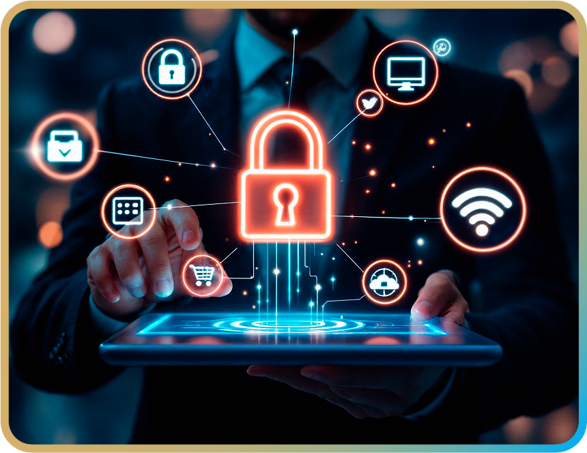
Secure insight extraction from encrypted inputs through privacy-preserving computation logic, ensuring raw data remains invisible during processing.
Real-World Applications for SMBs
PETs are not an “enterprise luxury”. In fact, PETs are a practical necessity for small and medium businesses that want to compete in a data-driven market without any compliance misstep.
Scenario A: Financial Fraud Detection Two small Fintech companies want to check if a loan applicant has a history of bad debt with the other.
-
The Old Way: Exchanging lists of bad debtors. This leads to a high risk of leaking sensitive customer financial data.
-
The PETs Way: System A queries System B: "Does this hashed ID have bad debt?" System B answers "Yes" or "No." No customer lists are ever exchanged.
Scenario B: Marketing Optimization A Brand and a Retailer want to measure advertising effectiveness.
-
The PETs Way: They run an intersection algorithm on encrypted datasets to calculate the Conversion Rate. The Brand gets the performance metrics, but it never sees the Retailer's CRM data.
In all these situations, PETs can secure collaboration that builds “Trustless Trust”. Businesses do not need to blindly trust your partner’s security to work with them.

Trustless B2B collaboration flow enabling cross-organizational data validation without exposing sensitive customer databases.
The Compliance Imperative: GDPR & The Trust Economy
In the EU market, where GDPR and the Data Act set the world's strictest standards, PETs shift security from a defensive cost to a competitive advantage.
By technically enforcing privacy, PETs neutralize the Schrems II risk of invalidating cross-border Data Processing Agreements (DPAs) and safeguard businesses against existential fines of up to 4% of global annual revenue for compliance failures.
Instead of avoiding data sharing to stay safe, PETs enable "Secure Sharing by Design." This approach ensures that cross-organizational intelligence flows remain compliant by default, significantly reducing the legal overhead of traditional data transfer agreements.
Moreover, when pitching to larger enterprises, the ability to prove that "We can analyze your data without ever 'seeing' it” is a powerful Unique Selling Point (USP). It helps SMBs bypass complex security audits.
AIDATACY Approach: Infrastructure for Data-in-Use Integrity
Technology only creates value when it supports a clear data strategy.
AIDATACY applies a zero-knowledge data governance model where privacy-enhancing technologies are treated as an operational standard, not an optional add-on.
The approach prioritizes data sovereignty by keeping raw data fully contained within its original environment. Collaboration is enabled by exposing only mathematical outcomes, not the underlying files. As a result, privacy is enforced at the analytic level, with encrypted computation ensuring data-in-use remains accessible to algorithms while opaque to humans.
From "Data Protection" to "Data Empowerment"
Extracting value shouldn't mean sacrificing privacy.
The modern market needs to compute on data, not possess it.
Security should not be a blocker to business growth. The future belongs to organizations that can break down data silos to collaborate while rigorously upholding privacy commitments.
Stop risking raw data. See how Privacy-Enhancing Technologies (PETs) enable secure, compliant data analysis, turning GDPR into your competitive advantage. Contact us here